


- BlackLine and Trintech lead enterprise reconciliation with 20+ years of market depth, but implementation timelines run 6-12 months and costs start at $77K/year.
- FloQast carries the highest Capterra rating (4.9/5) and fastest adoption for accountant-friendly mid-market close management.
- Bluecopa is the only platform unifying O2C, P2P, and R2R reconciliation on a single AI-native data layer with self-learning matching.
- Numeric is the only vendor with published pricing ($0 free tier, $30/user/month Essentials) but depth is NetSuite-centric.
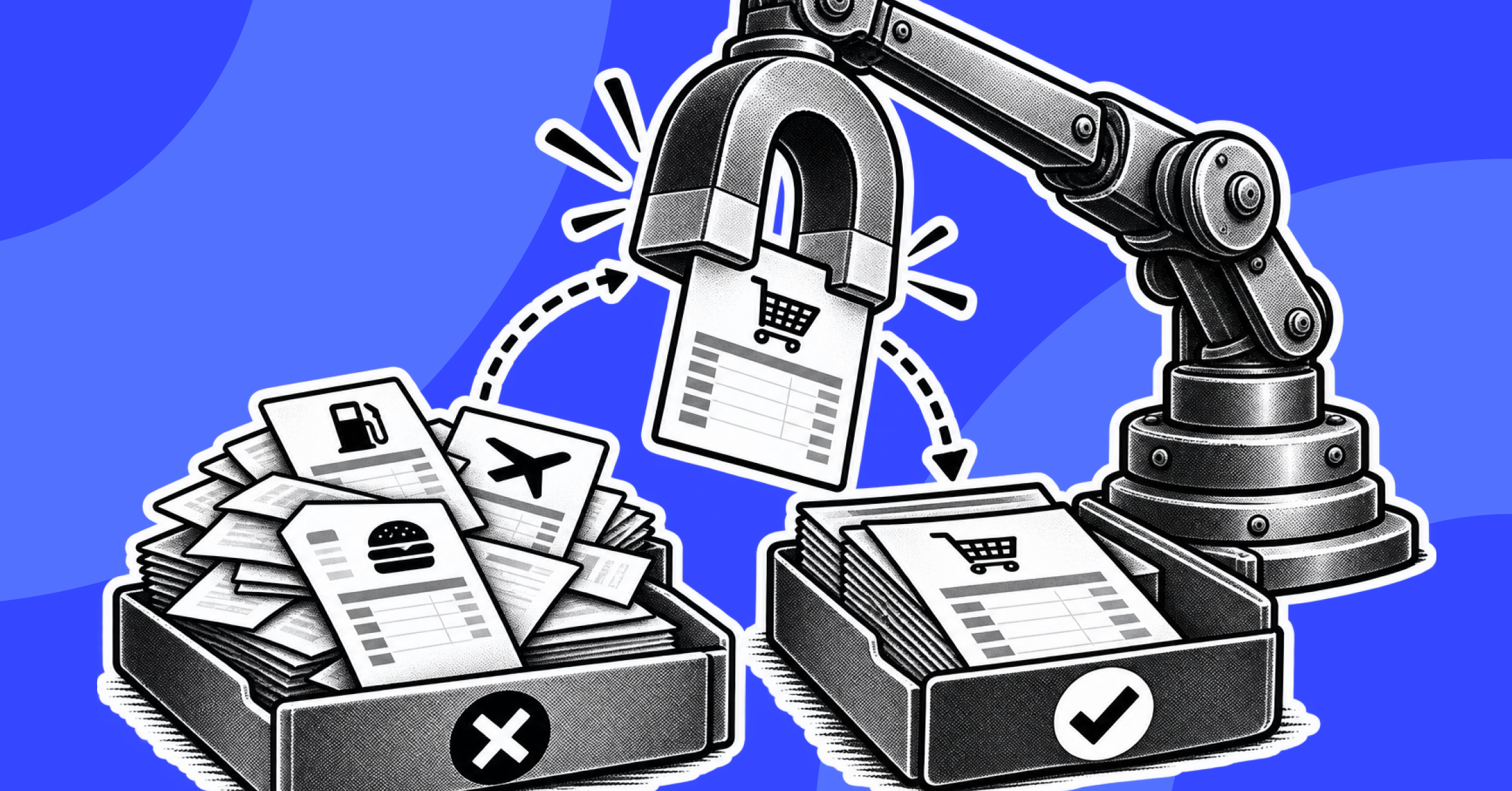
- Rule-based matching breaks when formats change or new gateways are added. Self-learning platforms adapt without manual rule rewrites.
Quick Answer: Best Account Reconciliation Tools Ranked
- BlackLine: Deepest enterprise-grade reconciliation and close platform
- Trintech: Purpose-built products for enterprise (Cadency) and mid-market (Adra)
- FloQast: Accountant-friendly reconciliation with the highest review-backed satisfaction
- Bluecopa: AI-native reconciliation unified with Order-to-Cash and Procure-to-Pay
- OneStream: Reconciliation embedded inside a full EPM and consolidation platform
- HighRadius: Agentic AI reconciliation with guaranteed operational KPIs
- Numeric: Transparent pricing and fast implementation for NetSuite-centric teams
- ReconArt: Specialist platform for extremely high-volume transaction matching
This article compares the 8 account reconciliation tools finance teams evaluate most often in 2026, ranked on official platform capabilities, verified G2 and Capterra feedback, and real company-size fit, not marketing claims. It matters because the wrong choice here is expensive twice: once in implementation effort, and again every month the reconciliation process still does not scale with your transaction volume.
Who Needs Account Reconciliation Tools
Account reconciliation tools are not one-size-fits-all. The right platform depends heavily on who is buying it and what is actually breaking down in their current process.
| Role | Pain Point | What They Need |
|---|---|---|
| Controller / Head of Accounting | Month-end reconciliation is a manual, spreadsheet-driven scramble with no clear exception ownership. | Automated matching with a full audit trail and certification workflow. |
| CFO | Close cycles stretch too long and reconciliation status is invisible until the last few days of the month. | Real-time visibility into reconciliation progress tied directly into close and reporting. |
| Finance Ops / Shared Services | Reconciling across multiple entities, currencies, and ERPs without a standardized process. | Multi-entity, multi-ERP reconciliation on one platform. |
What Is Account Reconciliation Software?
Account reconciliation software automates the comparison of internal financial records, like the general ledger and sub-ledgers, against external records, like bank statements and vendor statements, to confirm the balances match before the books close. Instead of matching transactions by hand in spreadsheets, the platform ingests data from banks, ERPs, and payment gateways, applies matching logic, flags exceptions, and produces an audit trail.
Most account reconciliation software on the market today handles bank reconciliation, sub-ledger-to-GL reconciliation, intercompany reconciliation, and balance sheet certification at minimum. Increasingly, platforms are also adding AI-driven fuzzy matching, so the system learns from historical matches instead of relying purely on static rules a person has to maintain.
How I Ranked These Account Reconciliation Tools
I evaluated each platform against what its own website says it does, checked those claims against verified user feedback on G2 and Capterra, and weighed both against how each product actually holds up for the finance teams likely to be reading this.
- Automation Capabilities: Whether the platform automates transaction matching, exception handling, and reconciliation workflows end to end.
- ERP Integration Depth: Whether the platform connects at the trial-balance level or offers transaction-level detail with drill-through.
- Ease of Implementation: Typical rollout timelines and whether the platform needs a dedicated admin or consultants.
- Scalability: Whether the platform handles growing transaction volumes and entities without expensive tier upgrades.
- Security and Compliance: SOC 2 certification, SOX Section 404, audit trail depth, and role-based access controls.
- Pricing Transparency: Whether pricing is published or quote-only, and whether costs scale predictably.
Side-by-Side Comparison
| Vendor | Best For | Size | Key Differentiator | G2 |
|---|---|---|---|---|
| BlackLine | Enterprise-grade reconciliation and close | Enterprise | 12 Verity AI agents, 4,300+ customers | 4.5 |
| Trintech | Enterprise + mid-market with separate products | Enterprise | Cadency + Adra, 99%+ auto-match | 4.5 |
| FloQast | Accountant-friendly close and recon | Mid-Market | Capterra 4.9/5, "built by accountants" | 4.6 |
| Bluecopa | AI-native recon unified with O2C and P2P | Enterprise | Only platform unifying O2C, P2P, R2R | 4.8 |
| OneStream | Recon embedded in full EPM suite | Enterprise | Gartner MQ Leader, 4 years running | 4.6 |
| HighRadius | Agentic AI with guaranteed KPIs | Enterprise | 200+ AI agents, Gartner MQ Challenger | 4.3 |
| Numeric | NetSuite-centric mid-market close | Mid-Market | Free tier, $30/user/mo, 90%+ auto-match | 4.8 |
| ReconArt | High-volume transaction matching | Mid-Market | Millions of txns matched per minute | 3.6 |
8 Best Account Reconciliation Platforms Reviewed in Detail
{{accordion}}
1. BlackLine | 4.5 G2 | Best for: Large enterprises
BlackLine positions itself as an agentic financial operations platform built around its Verity AI foundation, spanning account reconciliations, transaction matching, journal entry management, and invoice-to-cash. Its Studio360 architecture is designed to integrate and orchestrate the full record-to-report process. BlackLine reports more than 4,300 companies on the platform and cites a 70% average reduction in close time.
Key Features
- Verity AI agent suite: 12 named agents covering reconciliation prep, matching, accruals, flux analysis, anomaly flagging
- Risk-based reconciliation workflows with balance sheet certification
- High-Frequency Reconciliation: daily or on-demand matching
- 30+ pre-built ERP connectors including SAP, Oracle, NetSuite, Workday
- Studio360 architecture connecting recon into broader R2R and invoice-to-cash
Pros
- Automates close cycle end to end, shortening close while improving accuracy
- Strong close checklist workflow with centralized audit visibility
- Reliable SAP and Intacct connectivity praised by reviewers
- Cloud accessibility for distributed teams
Cons
- Steep administrative learning curve, often requires dedicated admin
- Mid-market deployments average 22-25 month ROI payback
- Interface feels dated compared to newer platforms
- Limited Dynamics connectivity in some configurations
Pricing: Not published. Custom enterprise pricing. G2 reports mid-market deployments average ~$77,000/year.
2. Trintech | 4.5 G2 | Best for: Enterprise + mid-market
Trintech runs three distinct product lines: Cadency for large enterprises, Adra for mid-market organizations, and ReconNET for operational reconciliations. The platform spans account reconciliation, transaction matching, close management, and intercompany accounting. Trintech reports 99%+ auto-match rates and a 96%+ reduction in time spent on daily reconciliations.
Key Features
- Cadency: balance sheet recon, transaction matching, close management, GRC workflows
- Adra: multi-way matching (3-way, 4-way+) embedded in Microsoft 365
- AI-suggested actions learning from user matching activity
- Risk-based certification with built-in controls
Pros
- User-friendly enterprise matching that remains approachable
- Strong IT support experience praised by reviewers
- Fast mid-market onboarding with Adra
- Easy to administer, patch, and upgrade over time
Cons
- Interface slows on large reconciliations
- Layered implementation requires significant upfront planning
- Standard reports often need customization
- Perceived gap vs close-management specialists
Pricing: Not published. Custom quote-based for both Cadency and Adra.
3. FloQast | 4.6 G2 | Best for: Accountant-friendly close
FloQast positions itself as "built by accountants for accountants," emphasizing explainable, auditable AI. Its suite spans automated reconciliations, AI transaction matching, journal entry management, close management, and compliance evidence collection. FloQast reports 3,500+ global companies including Lululemon, DoorDash, and Shopify.
Pros
- Centralizes close activities including reconciliations in one place
- Strong reconciliation-to-audit handoff
- Seamless accounting-system integration
- Meaningfully faster recon on day one with AI matching
Cons
- UI and navigation need refinement
- Pricing can stretch for smaller companies
- Occasional sync issues reported
Pricing: Not published. Custom pricing, no public tiers listed.
4. Bluecopa | 4.8 G2 | Best for: AI-native unified finance ops
Bluecopa is built around its SamyxAI foundation, a family of purpose-built AI models for enterprise-grade finance operations. Rather than treating reconciliation as one module in a close suite, Bluecopa ties it directly into O2C, P2P, and R2R on a single data layer. The platform reports 97-99% accuracy in transaction matching and processing speeds of more than 5,000,000 records per hour.
Key Features
- Samyx Recon: high-volume fuzzy and deterministic hybrid matching
- Samyx Extract: document-to-data conversion with line-level provenance
- Self-learning matching that adapts to new patterns automatically
- 7 reconciliation types: payment gateway, bank-to-ledger, warehouse-to-ERP, sub-ledger-to-GL, intercompany, O2C, and 3-way invoice-to-payment
- Continuous reconciliation: same-day matching instead of month-end batch
- 200+ integrations including SAP, NetSuite, Sage Intacct, Xero, Shopify, Salesforce, Stripe
Pros
- Meaningful time savings from AI-native automation
- Unifies AP, AR, operations, controllership, and FP&A on one platform
- Frees finance staff for higher-value analysis work
- Self-learning matching adapts without manual rule rewrites
Cons
- Smaller G2 review base (26 reviews) than category incumbents
- Shorter enterprise deployment history as a newer platform
Pricing: Custom subscription based on transaction volume, team size, and modules. Request a demo for a quote.
5. OneStream | 4.6 G2 | Best for: EPM-first enterprises
OneStream positions itself as an AI operating system for modern finance, built to extend beyond traditional EPM. For reconciliation, it claims to be the only solution linking reported balances directly to reconciled accounts through Drill-to-Reconciliation. Gartner Magic Quadrant Leader for Financial Close and Consolidation for four consecutive years.
Pros
- Removes cross-tool reconciliation with unified platform
- Strong requirements coverage for financial close
- Reliable and audit-ready with robust compliance
Cons
- High TCO: $150K-$400K+/year licensing, $250K-$1.5M implementation
- Complexity for recon-only buyers
- Average ROI timeline runs ~16 months
Pricing: Enterprise pricing via direct quote. Entry-level estimated at $150K-$250K/year.
6. HighRadius | 4.3 G2 | Best for: Agentic AI with KPIs
HighRadius markets its Financial Close and Reconciliation product around guaranteed operational KPIs: 95% transaction auto-match, 99% reconciliation accuracy. Its R2R Agent Builder converts uploaded Excel processes into AI agents. Reports 1,500+ finance teams including Adobe, 3M, and Nike.
Pros
- 90%+ payment reconciliation automation
- Close cycles reduced by up to 50%
- Handles high transaction volume across modules
Cons
- Complex onboarding with many configuration options
- Limited non-standard format handling
- Heavy platform for mid-market teams
Pricing: Not published. Custom enterprise pricing. Gartner MQ Challenger.
7. Numeric | 4.8 G2 | Best for: NetSuite mid-market
Numeric describes itself as an AI close automation platform with the only genuine free tier in this category. Reports 90%+ auto-match rate on bank reconciliations, roughly 3x the industry standard. Real-time ERP sync for NetSuite every 1-2 minutes at the transaction level.
Pros
- Fast implementation and strong ROI signal
- AI-drafted variance analysis saves close time
- Genuine free tier with unlimited users
Cons
- Deepest integration is NetSuite only
- No Capterra listing found at time of research
- Close-management-first, not full finance ops
Pricing: Published. Free at $0/month. Essentials $30/user/month. Growth and Enterprise custom.
8. ReconArt | 3.6 G2 | Best for: High-volume matching
ReconArt is a single-solution company focused entirely on reconciliation since 2011. Matches millions of transactions per minute with 1:1, 1:many, and many:many logic. Offers cloud SaaS and on-premise deployment. Covers securities and Nostro/Vostro reconciliation for banking and financial services.
Pros
- Fast matching at real volume with powerful rule configuration
- Strong regulated-industry compliance (SOX, FCA CASS, SOC 2, GDPR)
- Specialist depth in securities reconciliation
Cons
- Smallest review base (5 G2 reviews)
- Interface requires significant learning curve
- AI capabilities still maturing (self-learning on roadmap)
Pricing: Edition-based tiers for SMB/mid-market vs enterprise. Specific figures not published.
How to Choose the Right Account Reconciliation Tool
Before comparing vendors feature by feature, get clear on what you are actually optimizing for.
- Match volume to platform, not brand recognition: A platform built for a 500-person company processing 10,000 transactions a month is a different tool than one built for a bank processing millions a day.
- Weigh standalone recon against broader finance ops: Decide whether you need reconciliation as an isolated function or whether data needs to flow into AR cash application, AP invoice matching, and close reporting.
- Test AI maturity claims with your own data: Ask each vendor to demonstrate what happens when an invoice format changes or a new payment gateway gets added.
Common Mistakes When Choosing
- Confusing recon software with close management. Some platforms are strong on close checklists but thin on matching engine depth, and vice versa.
- Treating "AI-powered" as a meaningful differentiator on its own. Ask whether the AI handles matching and exception detection, or only assists with flux analysis.
- Choosing on G2 rating without checking company-size fit. A platform rated highly by mid-market teams may not deliver the same experience at a 10,000-person enterprise.
- Ignoring how recon data reaches close and reporting. A platform that automates matching but requires a manual export leaves the downstream bottleneck intact.
- Underestimating rule-based vs self-learning matching. Rule-based works when formats are stable. It breaks when formats change, new vendors appear, or an acquisition brings a new gateway.
Why Bluecopa Is the Right Choice for Unified Finance Operations
For mid-market to enterprise finance teams, the deciding factor usually is not whether a platform can match transactions accurately. It is whether reconciliation data flows into the rest of finance operations without a second manual pass. Bluecopa is the only platform in this comparison that unifies account reconciliation with Order-to-Cash and Procure-to-Pay on one AI-native data layer.
On transaction volume: Samyx Recon processes more than 5,000,000 records per hour across 7 reconciliation types. On ERP landscape: it connects natively to SAP, NetSuite, Sage Intacct, and 200+ other systems. On AI maturity: matching is self-learning rather than rule-based, so when a vendor changes an invoice format or a new payment gateway shows up, the system adapts without a manual rule rewrite.
Bottom Line
The right account reconciliation tool depends on what your finance team actually needs fixed. If the bottleneck is enterprise-wide reconciliation depth and you need the most market-tested platform, BlackLine and Trintech have the most mature products. If your team values usability above everything, FloQast leads on independently verified satisfaction.
If you need reconciliation tied directly into a unified, AI-native finance operations platform spanning O2C, P2P, and R2R, Bluecopa is the only option here that covers all three. If you want the fastest, most affordable close automation for a NetSuite-centric mid-market team, Numeric has a genuine free tier. And if your environment processes millions of transactions per minute in banking, ReconArt is the specialist built for exactly that.
Frequently Asked Questions
What is account reconciliation software?
It automates comparing general ledger and sub-ledger records against bank statements and vendor records to confirm balances match before close.
What is the difference between rule-based and AI-native reconciliation?
Rule-based matching needs manual updates when formats change. AI-native reconciliation, like Bluecopa's Samyx Recon, adapts automatically as patterns shift.
How much does account reconciliation software cost?
Most enterprise vendors require a custom quote. Numeric publishes pricing from $0/month. Mid-market tools start around $24,000-$50,000/year. Enterprise platforms range from $100,000 to $500,000+ per year.
Which tool works best for GCC and shared services teams?
Bluecopa's multi-ERP, multi-entity O2C, P2P, and R2R coverage fits Global Capability Center reconciliation needs particularly well.
Can account reconciliation software connect to multiple ERPs?
Yes. BlackLine offers 30+ ERP connectors, OneStream 250+, and Bluecopa 200+, including SAP, NetSuite, and Sage Intacct.

Book a demo
See Bluecopa run on your own close
Enterprise finance teams using legacy recon tools spend 40% of close week re-matching exceptions their platform should have caught.
70%
Faster month-end close
95%
Reduction in manual effort
100%
Data accuracy
30 min · your ERP · no slide deck